
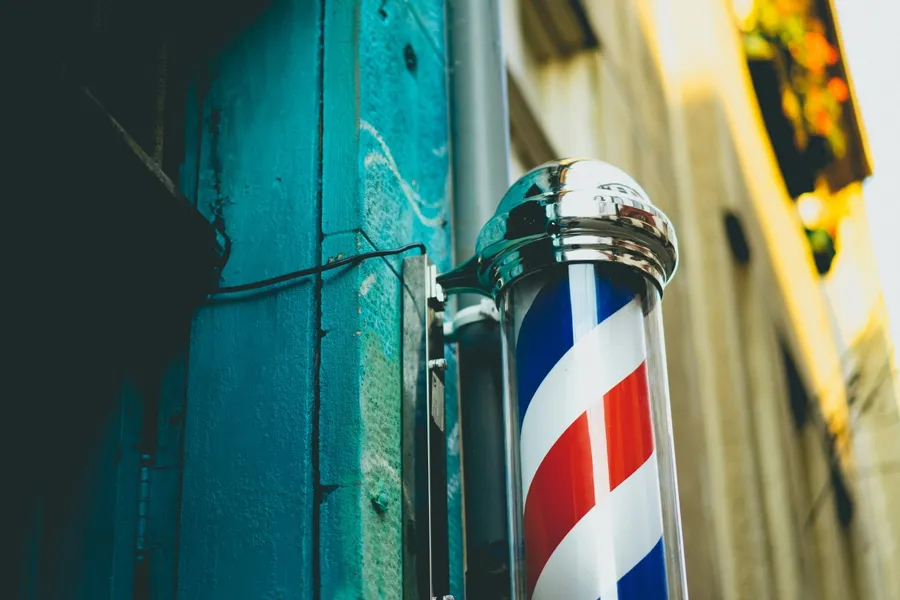
Public concern about the rapid spread of Turkish-style barber shops and vape stores on high streets has become widespread. Many people observe clusters of near-identical premises that appear under-used, operate largely in cash, and seem to thrive even as traditional retail declines. The common suspicion is that a significant number function as fronts for money laundering linked to drugs, people smuggling or other organised crime. This article examines whether that view is supported by evidence, what alternative explanations exist, and how money laundering through such businesses actually works.
The boom and the perception
Barber shop numbers in the UK rose by more than 50 per cent between 2018 and the mid-2020s, reaching roughly 18,400 premises. Hundreds opened in single recent years even while other high-street sectors contracted. Many brand themselves as “Turkish” barbers offering skin fades, hot-towel shaves and related services. Vape shops have similarly proliferated.
Observers frequently note streets with multiple such businesses, limited visible customers, and a preference for cash. Political figures and local residents have publicly linked the pattern to money laundering and organised crime. The perception is amplified by the visible demographic and commercial change in many town centres.
Official assessment and enforcement action
The National Crime Agency has stated that intelligence linking barber shops and other cash-intensive businesses to money laundering and wider criminality has increased. It estimates that at least £12 billion in criminal cash is generated in the UK each year, of which around £1 billion is laundered through high-street businesses including mini-marts, barber shops, vape stores and similar outlets.
Operation Machinize (and its larger second phase) was the main coordinated response. In the October phase alone, involving every UK police force plus HMRC, Immigration Enforcement, Trading Standards and Companies House, officers visited or raided 2,734 premises. Results included 924 arrests, more than £10.7 million in suspected criminal proceeds seized or restrained, and over £2.7 million in illicit goods destroyed (including large volumes of illegal vapes, cigarettes and tobacco). Hundreds of companies were referred for further investigation and numerous illegal-working notices were issued. Officials repeatedly identified barbers, vape shops, mini-marts, nail bars and car washes as commonly exploited formats.
Government statements have been explicit. Ministers have described high streets as having been “hijacked” by criminal gangs using these shop fronts to launder money, sell illicit goods and facilitate other offences. Additional funding, a dedicated High Street Organised Crime Unit, longer premises closure powers and reviews of skilled-worker visa sponsorship for the sector have followed. See the GOV.UK announcement.
Concrete cases
Not every investigation produces a pure money-laundering conviction focused solely on the shop itself. Many cases involve linked primary offences, civil recovery, seizures or immigration breaches. Documented examples include:
-
Hewa Rahimpur, who had operated a barber shop, was identified as a leading figure in a network assessed as responsible for smuggling around 10,000 people across the Channel. He was sentenced to 11 years’ imprisonment in Belgium in 2023 following NCA involvement and extradition. The enterprise generated substantial cash that required handling. Coverage is available from BBC and The Guardian.
-
Other barber-linked prosecutions have involved people-smuggling logistics, drug supply from or via the premises, and (in one case) the use of Covid-related business funds for terrorism-related transfers.
-
Vape shops appear regularly in trading-standards and Proceeds of Crime Act cases involving the large-scale sale of illegal or non-compliant products. Confiscation orders in the hundreds of thousands of pounds have been made. The illicit trade itself produces the cash that then needs placement into the legitimate system.
Raids have repeatedly recovered significant cash sums from premises whose claimed turnover appeared inconsistent with observed customer numbers. Organised crime groups with established involvement in drugs or immigration crime (frequently described in reporting as Kurdish, Albanian or Iranian networks) feature prominently. The “Turkish” label is often branding rather than an accurate indicator of the operators’ origin.
Alternative and complementary explanations
The existence of criminal exploitation does not mean every such business is a front. The NCA itself notes that the majority of high-street shops are not considered suspicious.
Legitimate demand exists. Male grooming has expanded, with skin fades and related services becoming mainstream. Turkish and Kurdish barbering traditions, combined with experience gained on holidays and through migration, created a popular offer that many customers prefer. Start-up costs are relatively low, vacant units have been plentiful, and barbers can operate as sole traders without mandatory Companies House registration. These factors make the format accessible to genuine entrepreneurs and recent migrants with relevant skills.
Over-supply is also possible. Multiple competing shops on the same street can reduce individual customer numbers without any criminal intent. Some businesses may simply be commercially weak or intermittent. Cash handling remains common in the sector for practical reasons even among legitimate operators.
The suggestion that some people combine a high-street business with in-work benefits, finding it preferable to conventional part-time employment, is plausible in parts of the grey economy but is secondary to the organised-crime pattern identified by the authorities. Illegal working and associated exploitation risks appear more frequently in the operational intelligence.
The Romsey hotel case
Romsey provides a useful counterpoint. The White Horse Hotel, a higher-end premises, was taken into NCA control in 2019 as part of a civil recovery settlement connected to an international money-laundering network linked to Jonathan Nuttall and associates. Assets including the hotel were handed over. The matter did not proceed to a full criminal trial on the laundering allegations themselves. Nuttall was later convicted and imprisoned for a separate plot involving devices directed at NCA lawyers. The episode demonstrates that money laundering is not confined to low-end cash shops. Higher-value property and businesses are also used. It does not undermine the high-street pattern. It shows the same activity occurring across different asset classes. Contemporary reporting includes the Daily Echo and later coverage of the hotel’s subsequent management.
How money laundering through cash businesses works
Money laundering typically involves three stages: placement (introducing illicit cash into the financial system), layering (obscuring its origin) and integration (using the funds as apparently legitimate wealth).
Cash-intensive service or retail businesses are well suited to the placement stage. Operators can overstate genuine or invented takings, mix criminal cash with any real customer receipts, and bank the total as business revenue. Once inside the banking system the funds become far harder to distinguish. No single enormous cash injection is required. Steady proceeds from drugs, people smuggling or illicit tobacco and vapes can be cleaned incrementally, especially across multiple premises. The same businesses can simultaneously support other criminal activity: housing illegal workers, selling illicit goods, or providing a physical base.
Banks and tax authorities eventually detect outliers, but the practical difficulty of proving the absence of customers, combined with the volume of small cash businesses, creates a usable window.
Balanced assessment
The public suspicion has a clear foundation in official intelligence, large-scale multi-agency operations, cash and asset seizures measured in the tens of millions, and linked prosecutions involving people smuggling, drugs and related offences. A meaningful subset of high-street barbers and vape shops, particularly those that are cash-only, clustered, and show limited genuine trade relative to claimed turnover, function as vehicles for money laundering and associated organised crime.
At the same time, the format meets real consumer demand, has low barriers to entry, and supports many legitimate operators. Empty-looking premises can result from ordinary commercial competition or weak trading as well as criminal intent. Distinguishing the two requires investigation rather than assumption.
Enforcement has intensified because the authorities assess the problem as real and damaging to legitimate businesses and local communities. The majority of ordinary high-street shops remain uninvolved. The controversy reflects both genuine organised-crime activity and the broader visible transformation of many town centres.
Key sources
- National Crime Agency Operation Machinize reporting and estimates of criminal cash flows.
- GOV.UK statements on high-street organised crime measures and funding.
- Court and media reporting on the Rahimpur people-smuggling conviction (2023).
- Contemporary coverage of the White Horse Hotel civil recovery in Romsey (2019 onwards).
- Retail analytics on the growth in UK barber shop numbers.