
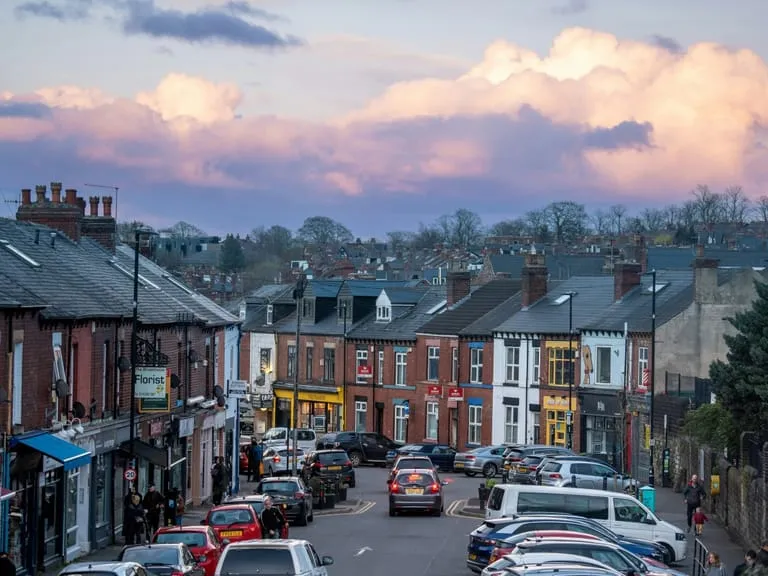
Every week, across Britain, the same argument surfaces in council meetings, local newspapers and online forums: “The high street is dying because people have to pay for parking.” It is an easy and popular explanation. After all, nobody likes handing over money just to leave their car for an hour or two. Remove the charges, the theory goes, and shoppers will flood back to our town centres.
But is free parking truly the magic solution everyone claims it to be?
The popular narrative
It is easy to see why the idea has such traction. In an age when online shopping is effortless and out-of-town retail parks offer vast free car parks, paying £2 or £3 to park in town feels like an unnecessary barrier. Many people genuinely believe that if councils scrapped charges, high streets would suddenly spring back to life.
Yet the evidence tells a more complicated story.
Thriving towns often charge for parking
Look at some of Britain’s most successful town centres and a pattern emerges. Places like York, Bath, Cambridge and Cheltenham all charge for parking, yet they remain busy, vibrant destinations. Their high streets are not empty. People still visit, spend money and return.
Meanwhile, many towns that have experimented with free or heavily discounted parking have seen little lasting improvement. The problem is simple: most town-centre car parks are already full during peak hours. Removing the charges does not create more spaces; it simply removes the mechanism that manages demand.
The chaos of free parking
If every town-centre car park became free tomorrow, the immediate result would not be a retail renaissance. It would be longer queues at the entrances, frustrated drivers circling for spaces, and all-day parkers (commuters and workers) taking the spots that short-stay shoppers need most.
Councils know this. That is why they use pricing as a tool to encourage turnover. A short-stay tariff gets people in and out quickly, freeing spaces for the next customer. Free parking removes that incentive and often makes the situation worse for the very people it is supposed to help.
Parking as a revenue source
There is another practical reason councils are reluctant to scrap charges. Town-centre car parks sit on extremely valuable land. The income they generate helps fund local services, from bin collections to libraries. Without that revenue, many councils would face a difficult choice: cut services elsewhere or sell the land to housing developers.
Selling prime town-centre sites for flats would almost certainly make parking problems worse, not better. More residents means more cars, yet fewer spaces available for shoppers. It is a classic case of short-term thinking creating long-term headaches.
What about out-of-town centres?
The success of large out-of-town shopping centres is often held up as proof that free parking works. Places like Meadowhall, the Trafford Centre and Bluewater draw huge crowds partly because parking is free or very cheap.
But is free parking really the main reason they thrive?
The reality is more nuanced. These centres succeeded because they offered something the high street often could not: a wide range of big-name stores under one roof, easy access from major roads, and modern facilities. Retailers moved there because rents were lower and logistics were simpler, not purely because of parking policy.
Interestingly, some out-of-town sites in prime locations do charge for parking and still perform strongly. Shoppers appear willing to pay when the overall experience is good. This suggests that the quality and range of shops matter far more than whether parking is free.
The real reasons high streets struggle
The decline of many high streets has little to do with parking charges. Online shopping, changing consumer habits, high business rates, poor public transport links, and a lack of variety in shops have all played much larger roles.
Free parking might remove one small irritation, but it will not bring back the department stores that closed, the independent shops that could not compete with Amazon, or the footfall lost to click-and-collect.
So what is the answer?
Free parking is not a panacea. At best, it is a minor part of a much bigger picture. At worst, it creates congestion and loses councils valuable income without delivering the promised revival.
The towns that are bucking the trend are those that focus on what really matters: a strong mix of shops and services, attractive public spaces, regular events, good pedestrian links, and easy access by bus, bike and train as well as car.
Parking policy should be part of the conversation, but it should never be the entire conversation. Charging for parking is not the villain it is often made out to be. In many cases, it is simply a practical way of managing a scarce resource in busy town centres.
The high street’s future will not be saved by free parking alone. It will be saved by places that give people a reason to visit that goes far beyond where they leave their car.