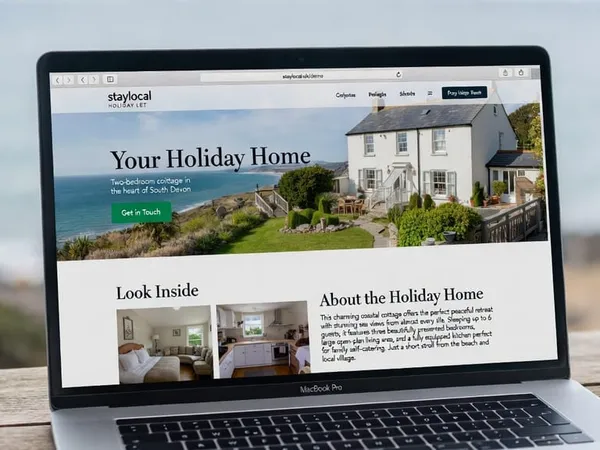
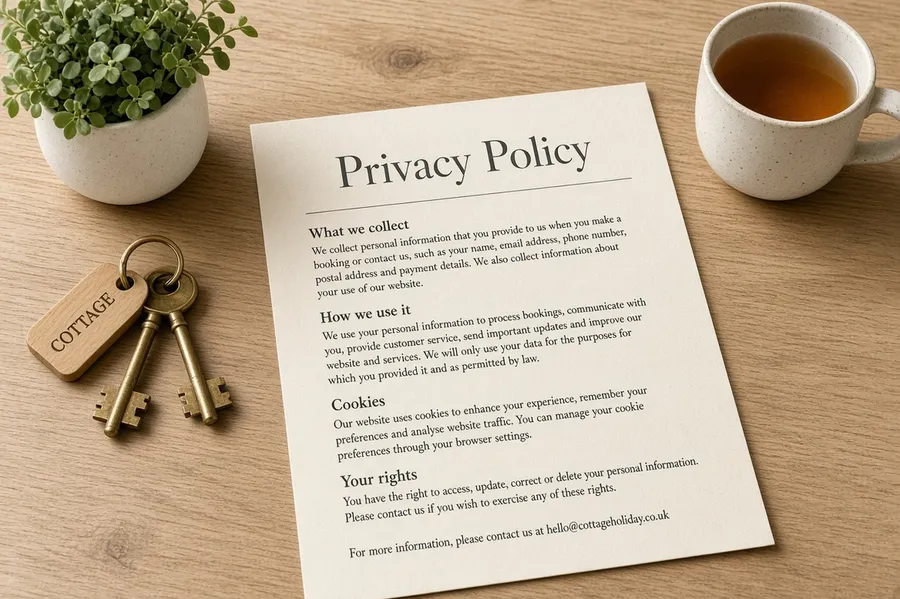
Every StayLocal site ships with a basic privacy policy page. You can see a working example here: https://cottage.demo-sites.uk/privacy. It is deliberately short and covers the essentials most owners need from day one.
That page is not just another legal formality. It is a practical requirement when you take bookings and hold guest information yourself.
Why it matters
When guests book direct they deal with you, not a large platform that already has its own detailed privacy machinery. You become the data controller for the information they give you.
UK data protection rules (the UK GDPR and Data Protection Act) require you to tell people what personal data you collect, why you collect it, how long you keep it, and what rights they have. A clear privacy page meets that duty in plain language.
It also reduces friction. Guests who can see exactly how their details will be used are more likely to complete a booking. When a guest later asks what information you hold about them, you can point to the published policy and respond from a position of clarity rather than scrambling through emails and spreadsheets.
Most importantly, it forces you to look at your own processes. Writing the policy makes you decide what you actually collect, how long you keep it, and whether any of it is unnecessary.
What the policy needs to cover
If you take direct bookings you need to cover the information collected at enquiry and booking stage: name, email, phone, arrival dates, any special requests, and payment-related details.
You do not normally store full card numbers yourself. Payment providers such as Stripe process those details directly. Your policy should say so.
If you keep guest records after the stay (for returning visitors, review requests, or simply because the booking system retains history), you need to say how long that data is retained and for what purpose.
If the property has CCTV, the policy must mention it. Guests need to know cameras are present, the general purpose (security of the property), and roughly how long footage is kept. Hiding the existence of cameras creates more problems than it solves.
Your guests have the right to request a copy of the personal data you hold about them. That request can arrive years after the booking. Keep your notes professional. Anything written in a guest record that would look awkward if printed out and handed over should not be there in the first place.
Cookies and tracking
StayLocal sites are built to be straightforward. We do not track visitors across the web, we do not build advertising profiles, and we do not sell guest information to third parties.
That means the cookie situation stays simple. The policy can state that only the cookies necessary for the site and booking process to function are used. There is no need for complex consent banners or long lists of tracking partners.
If you later add an analytics tool or a third-party booking calendar, the policy is updated to reflect the actual cookies in use. Until then the statement remains short and accurate.
How we handle it
Every site includes a clear starting privacy page. The demo version shows the structure: what we collect, how we use it, cookies, and your rights.
We then help you adapt it. Tell us:
- Whether the property has CCTV or other monitoring
- Any extra information you routinely collect (dietary requirements, vehicle registration for parking, etc.)
- How long you prefer to keep completed booking records
- Any third-party tools you already use that handle guest data
We draft the updated version and send it for your approval before it goes live. You remain in control of the wording. We simply keep it consistent, readable, and easy to revise later.
Practical rules that work
Keep the language plain. Guests will not read a dense legal document. Short paragraphs and everyday words are more useful than formal phrasing that nobody finishes.
Treat the policy as a living document. When your processes change (new payment method, new cleaning company that receives guest details, longer retention of records), update the page. An outdated privacy notice is worse than a short one.
When a guest exercises their right of access, respond promptly and stick to the facts. The published policy gives both of you a shared reference point.
A privacy page will not stop every awkward request. It will stop a lot of confusion, and it will give you a clear, professional position when questions do arise. That alone makes the small amount of attention it needs worthwhile.
When you have the details of how you actually handle guest information, send them across and we will produce a clean version ready for your site.