
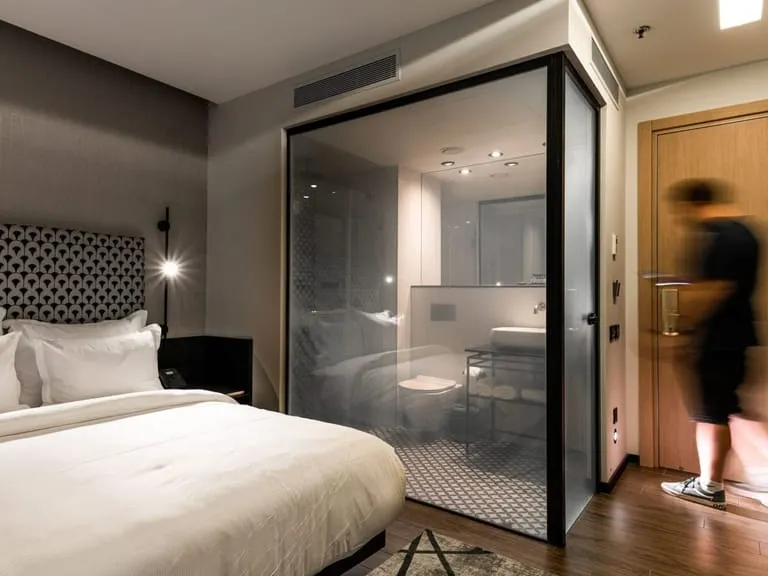
Have you ever checked into a hotel room, eager for a bit of relaxation, only to discover that the bathroom lacks a proper door? It’s a baffling trend that’s been cropping up in accommodations worldwide, sparking frustration among travellers.
A campaign called Bring Back Doors, started by a disgruntled American traveller, highlights this issue with a tongue-in-cheek plea for the return of basic privacy. Their website points out examples from various spots, including the UK, where places like the Holmes Hotel in London and the Hilton Birmingham Metropole have been called out for skimpy bathroom setups that leave little to the imagination.
But it’s not just an American gripe. Discussions on forums like Hacker News reveal a global chorus of complaints, with users sharing horror stories from Europe and beyond, questioning why designers seem intent on turning hotel stays into awkward communal experiences.
Roots of the Trend
The trend appears rooted in modern design fads, where architects prioritise aesthetics over functionality. Commenters on that Hacker News thread suggest it’s about making rooms feel more spacious or cutting costs on materials and cleaning. One user quipped that it’s a form of “hostile architecture” aimed at discouraging platonic room-sharing, forcing groups to book extra spaces.
Families travelling with children find it particularly irksome, as do friends on a budget trip. Solo travellers might shrug it off, but for most, the lack of a barrier means sounds, smells, and sights that no one wants to share.
Hygiene comes up too, with folks noting how doors help contain steam, reducing mould risks, and trap those aerosol particles from flushing that could otherwise waft through the room. It’s not just about privacy, it’s about basic comfort in a space you’re paying to escape the world.
UK Complaints
In the UK, this quirk has popped up in several well-known spots, drawing sharp reviews. Take the Strand Palace in London, where guests have lamented the absence of a bathroom door, describing it as a major flaw in an otherwise central location. One reviewer even mentioned that the hotel brushed it off as a deliberate choice to enhance the room’s openness, but that didn’t wash with those who felt exposed.
Over at The Londoner Hotel, also in the capital, travellers advise requesting rooms where the toilet at least has its own enclosure, as not all do, leading to uncomfortable surprises. The Z Hotel Victoria has faced similar backlash for its lack of bathroom privacy, with complaints about frosted glass or partial screens that don’t quite cut it, especially when sharing with a companion.
Further afield, in Stratford-upon-Avon, The White Swan Hotel has been dinged for bathrooms without full doors, though some praise the grand fixtures despite the mould and wobbly fittings. Even a Hilton in the UK got a mention in social media rants, with one guest recalling a stay marred by renovations that left no door at all, and the staff laughing off requests for compensation.
Examples Across Europe
Venturing into wider Europe, the complaints multiply. In Madrid, Hotel Opera has fielded questions about missing bathroom doors, with reviewers puzzled by the open-plan layout that seems more suited to couples than anyone else. Gibraltar’s Sunborn, a floating hotel, drew ire for rooms without bathroom doors, described as slightly tired despite the great location and food.
In Porto, Portugal, some hotels have been queried about absent doors, though responses insist toilets have frosted glass enclosures that suffice for most. Tennis coach Brad Gilbert vented on social media about half-glass shower doors in Rome, Paris, and London that soak the floor, a common European feature that’s baffled him for decades.
Comedian Vir Das echoed the sentiment, calling out see-through walls and doorless bathrooms as creepy designer choices that don’t actually enlarge the space. And in Italy, one hotel’s frosted glass doors prompted guests to improvise with towels clipped over entrances for makeshift privacy.
Cultural and Business Angles
These anecdotes align with the chatter, where users from Denmark and Shanghai described wet rooms with central drains and no separations, turning bathrooms into splash zones. There’s a cultural angle too, some argue it’s a Western hang-up, with Americans seen as more prudish about bodily functions compared to other regions.
One commenter joked about normalising intimacy, suggesting if you’re sharing a room, you should be fine with the full sensory experience. But others push back, insisting privacy is a universal need, not a cultural quirk. Business-wise, it’s tied to the “enshittification” of services post-pandemic, where chains cut corners on housekeeping and copy each other’s flawed designs to save pennies.
Upselling premium rooms with actual doors becomes a sneaky tactic, and reviews are the only real weapon guests have, though change comes slowly.
Social Media and Backlash
Social media amplifies these woes. A post by researcher John Scott-Railton went viral, decrying glass doors, no doors, and windows into bathrooms even in twin-bed setups, asking who on earth requests such features. Another user linked it to forcing separate bookings for friends or family, promoting sites like Bring Back Doors to scout privacy-friendly hotels.
Ultimately, this trend reflects a disconnect between trendy design and real guest needs. While some might adapt to open layouts in the name of modernity, the growing backlash suggests hotels risk alienating customers. Campaigns and reviews are pushing back, urging a return to doors that click shut, offering that simple sanctuary.
Until then, travellers might want to double-check room photos or pack a makeshift curtain, just in case. After all, a hotel stay should feel like a treat, not an exposure therapy session.